Same-day and short-stay recovery does not end at discharge.
Many individuals discharged following outpatient procedures or short-stay visits rely on calm, stable, and carefully coordinated transitions between procedural settings, recovery accommodations, follow-up care environments, and home. Sudden environmental changes, rushed travel conditions, or poorly coordinated discharge timing can introduce avoidable stress during a period when comfort, stability, and predictability matter.
Mobility therefore becomes an important logistical factor in supporting safe early recovery and reducing unnecessary disruption following discharge.
Same-day and short-stay recovery often depend on controlled transitions across environments. Predictable movement between procedure settings, recovery accommodations, and home can help support comfort, reduce friction, and preserve dignity during a sensitive post-discharge interval. While Eunoia Mobility does not participate in clinical care or discharge decision-making, structured mobility coordination can support the stability of these transitions within clearly defined non-clinical boundaries.
Eunoia Mobility provides clinically-informed, non-clinical mobility designed to support calm, predictable, and dignity-centered transitions following same-day and short-stay care. Each journey is intentionally structured to reduce avoidable environmental disruption, post-anesthesia strain, and coordination instability.
All mobility services are provided only following documented external clinical clearance, and Eunoia Mobility operates strictly within clearly defined non-clinical scope boundaries.


Our mobility framework focuses on three core principles:
Reliable timing, calm transitions, and structured discharge coordination help reduce uncertainty during early recovery and support stable movement between care environments and recovery settings.
Mobility planning considers temporary fatigue, post-anesthesia sensitivity, and movement tolerance so individuals can return to recovery settings without unnecessary strain.
Mobility coordination emphasizes controlled entry and exit, calm travel environments, and structured handoff to reduce disruption during the early post-procedure interval.
Structured mobility supporting individuals following anesthesia or procedural sedation who may experience temporary sensitivity during discharge transitions.
Examples may include:
Outcome Focus: Support safe, stable discharge transitions during early post-procedure recovery.
Mobility supporting individuals recovering from elective cosmetic and plastic procedures requiring same-day or short-stay discharge.
Examples may include:
Outcome Focus: Support calm and dignity-centered recovery movement following elective procedures.
Mobility supporting individuals following outpatient dental and oral surgical procedures.
Examples may include:
Outcome Focus: Support comfortable, low-disruption return following dental or oral surgical care.
Mobility supporting individuals following same-day ophthalmologic procedures requiring stable, low-stimulation environments.
Examples may include:
Outcome Focus: Support visually comfortable and predictable recovery movement following eye procedures.
Mobility supporting individuals undergoing outpatient reproductive and fertility-related procedures.
Examples may include:
Outcome Focus: Support calm, private, and well-coordinated transitions during fertility-related care journeys.
Mobility supporting individuals following laparoscopic or minimally invasive outpatient procedures.
Examples may include:
Outcome Focus: Support stable, low-strain return following minimally invasive procedures.
Mobility supporting individuals attending or recovering from a wide range of outpatient and same-day procedures across multiple specialties.
Examples may include:
Outcome Focus: Support predictable, well-coordinated movement across specialty outpatient care environments.
Mobility supporting individuals traveling between care facilities and recovery accommodations following same-day or short-stay procedures.
Examples may include:
Outcome Focus: Support smooth, dignity-centered transitions between procedural care and recovery accommodations.
Mobility supporting individuals returning to home or recovery environments following procedures that may involve temporary fatigue, dizziness, or reduced stability.
Examples may include:
Outcome Focus: Promote safe and comfortable return to recovery settings following procedures.
Mobility supporting individuals navigating residential or hospitality environments immediately following discharge.
Examples may include:
Outcome Focus: Support safe, stable entry into home or recovery accommodation following discharge.
Mobility coordination supporting individuals navigating multiple recovery-related environments within a single journey following same-day or short-stay procedures.
Examples may include:
Outcome Focus: Support safe, stable, and well-coordinated transitions across multi-stop recovery journeys while minimizing fatigue and logistical complexity.
Mobility coordination supporting individuals traveling with caregivers, family members, or companions during same-day or short-stay recovery journeys.
Mobility Considerations:
Outcome Focus: Enable coordinated, supportive mobility experiences that align caregiver presence with recovery needs while maintaining predictable transitions.
This mobility framework reflects coordination principles commonly observed across same-day procedures, post-anesthesia discharge, ambulatory surgery, outpatient recovery, and short-stay medical travel environments.
However, Eunoia Mobility does not provide medical treatment, anesthesia monitoring, clinical supervision, diagnostic assessment, or therapeutic intervention.
Eunoia Mobility operates strictly as a clinically-informed, non-clinical mobility infrastructure layer supporting predictable movement between care environments, recovery accommodations, and home following same-day and short-stay care.
Our role is to support individuals and families navigating the transition between discharge and early recovery through structured, reliable, and dignity-centered mobility that protects comfort, stability, dignity, and continuity across early recovery transitions while maintaining clearly defined non-clinical boundaries.

At Eunoia Mobility, we use cookies and similar technologies to enhance your browsing experience, provide secure and accessible transport services, and analyze our website traffic to continuously improve our performance.
By accepting, you consent to the use of these technologies. You can adjust your preferences at any time in our Cookie Settings.

Clinically-informed, non-clinical mobility structured around safe discharge transitions, post-anesthesia sensitivity, and predictable return-home or recovery-setting access following same-day and short-stay procedures.
Eunoia Mobility functions as a structured mobility coordination layer supporting individuals navigating early recovery following ambulatory procedures, outpatient interventions, and short-stay clinical visits.
We support recovery journeys — not diagnoses.
Same-day and short-stay recovery journeys may include individuals discharged following anesthesia, procedural sedation, minimally invasive interventions, diagnostic and interventional care, cosmetic and plastic surgery, fertility-related services, dental or oral surgery, ophthalmology procedures, and other outpatient or short-stay care pathways.
Eunoia Mobility does not diagnose, assess, or treat these conditions or procedures. Our role is limited to supporting predictable, recovery-aware mobility between care environments and recovery settings following documented external clinical clearance and within clearly defined non-clinical scope boundaries.
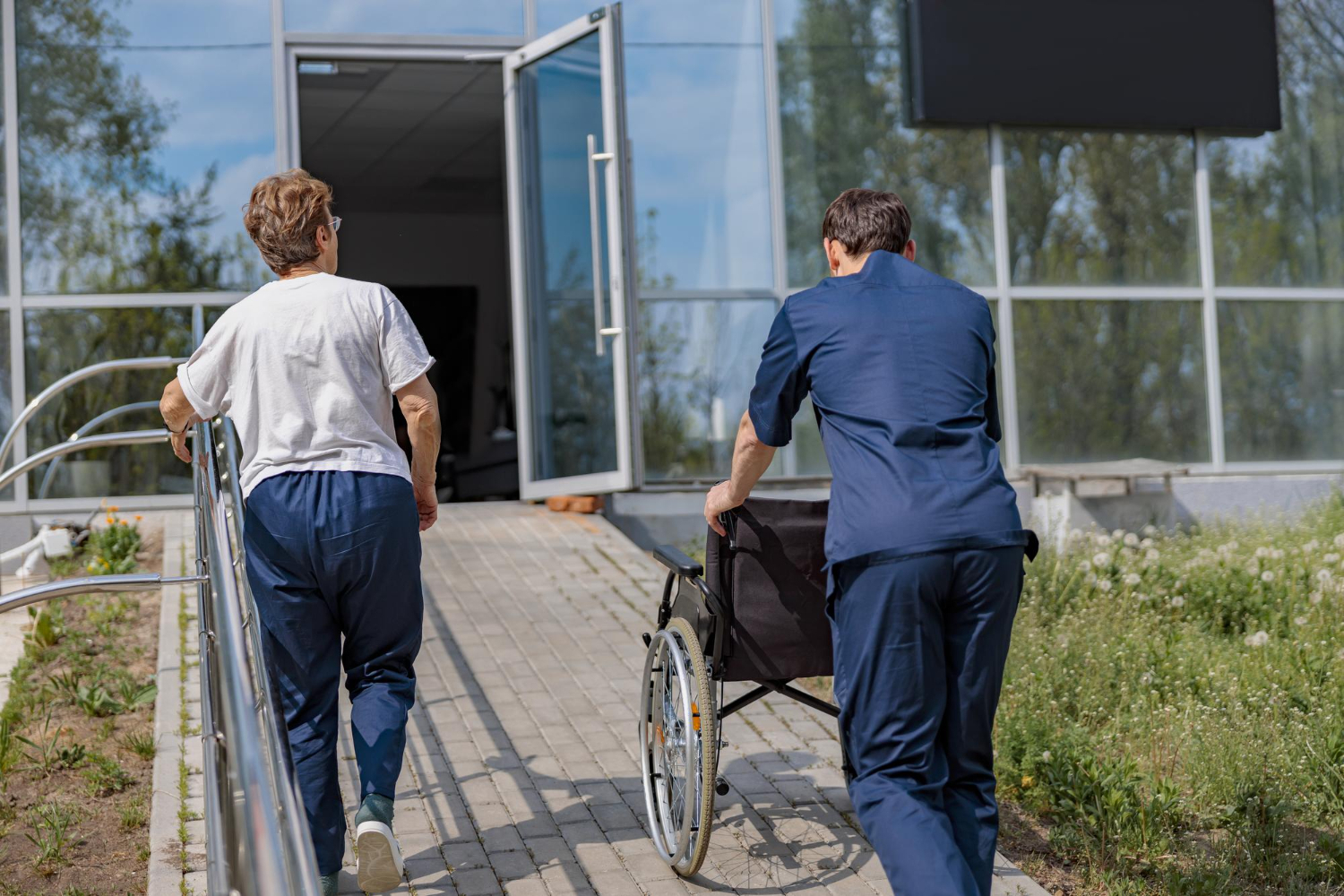
For many individuals, the early post-discharge window is temporarily sensitive. Residual sedation, mild dizziness, temporary fatigue, nausea sensitivity, reduced balance, or limited mobility tolerance may affect how safely and comfortably a person moves between the clinical environment and home, hotel, or supervised recovery accommodation.
Procedural recovery programs frequently emphasize safe discharge, escorted return, and short-term recovery stability. Structured mobility coordination can help reduce avoidable strain, environmental friction, and transition-related disruption between the point of discharge and the recovery setting.
Our role is to provide predictable, recovery-aware mobility that supports safe transitions between care environments and recovery destinations while operating strictly within clearly defined non-clinical boundaries.